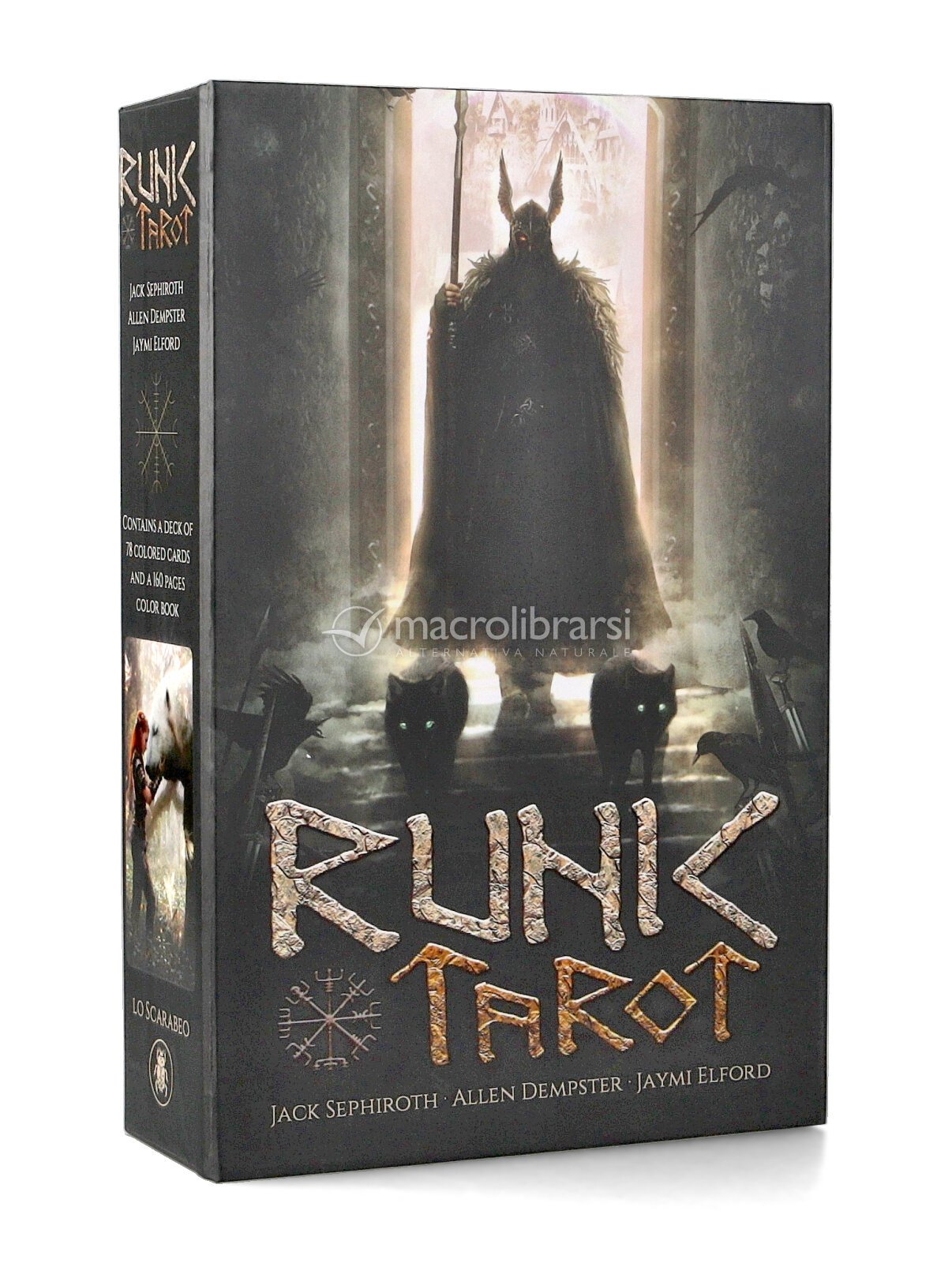
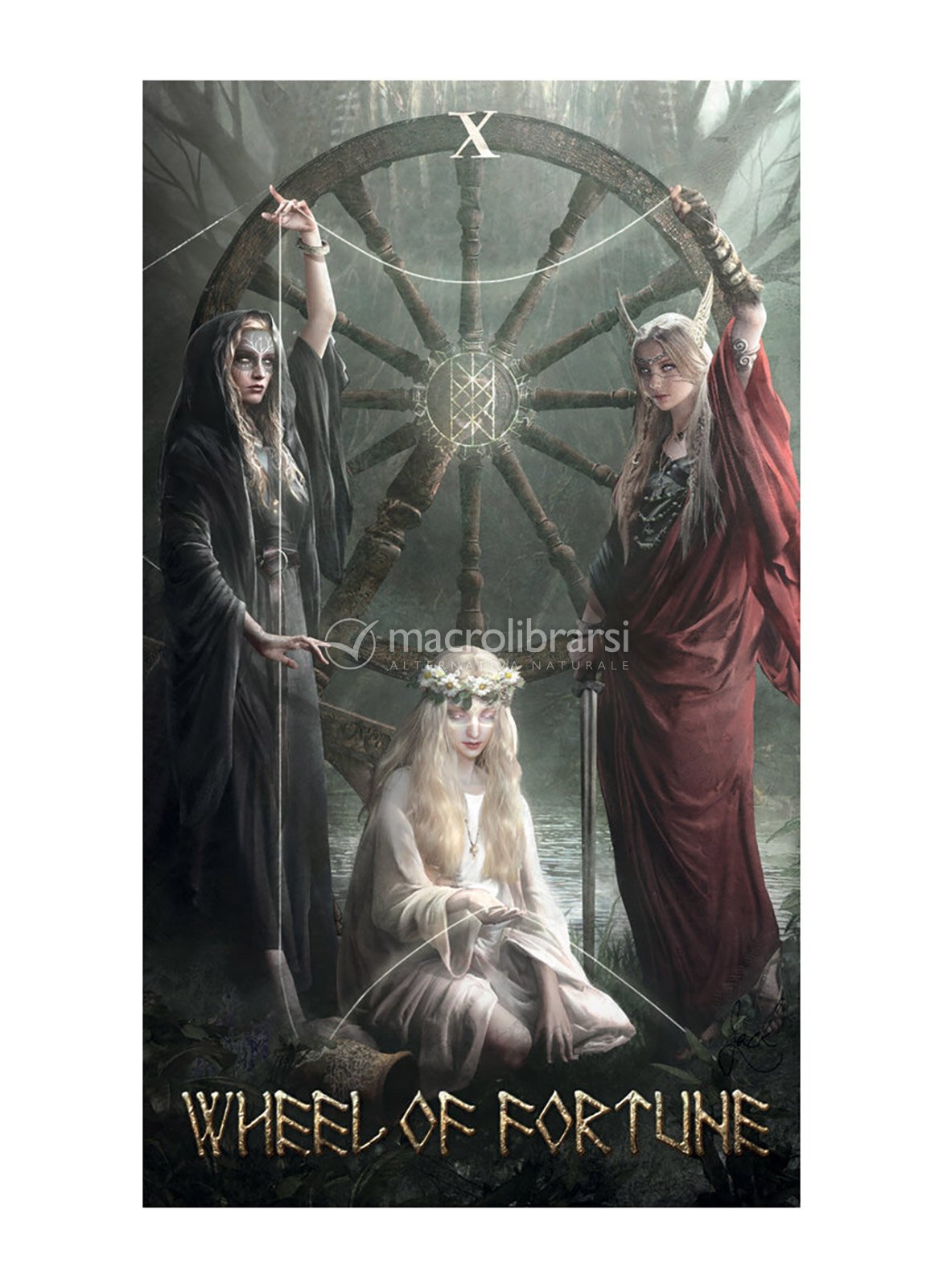
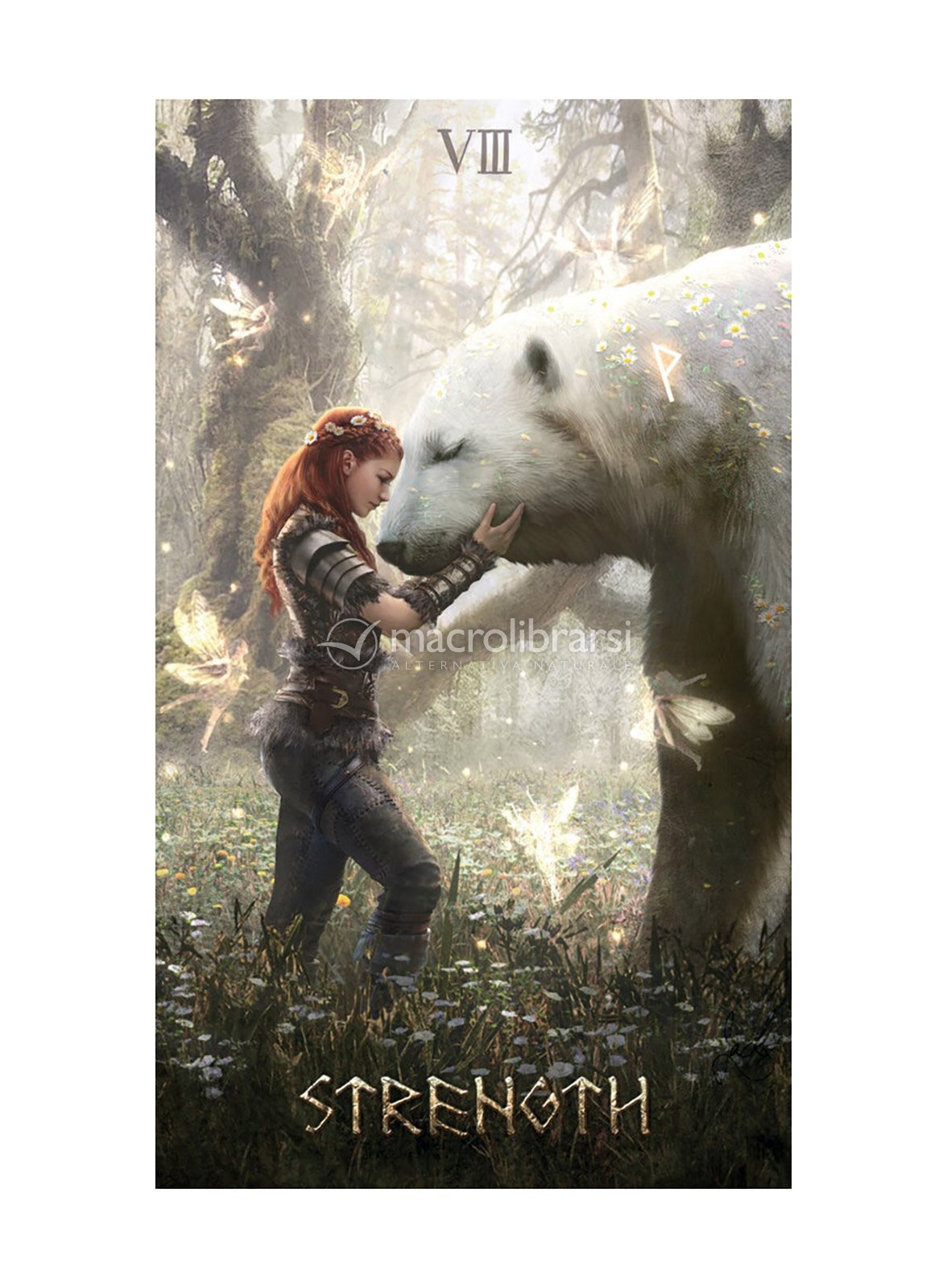
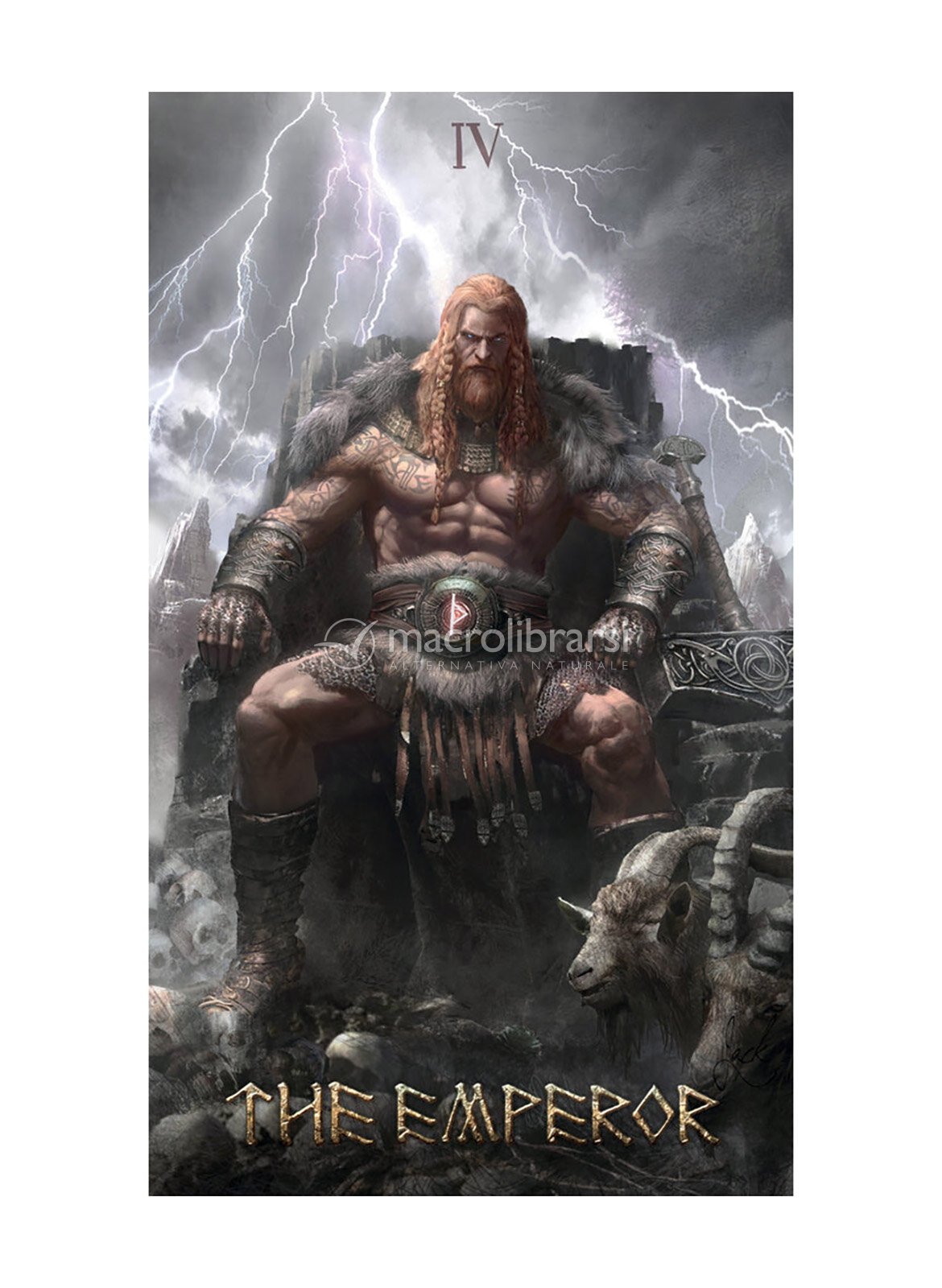
I Tarocchi Runici Lo Scarabeo sono un tributo alla scintilla divina insita nell’umanità.
Questo mazzo è il possente e feroce custode di un’aura antica.
Valhalla: il Regno degli Dei.
Intreccia insieme la saggezza delle Rune, la poesia degli Scaldi, il valore degli Einherjar e l’intramontabile dono della vita e della natura.
I Tarocchi Runici sono il miglior mazzo ideato sul tema della mitologia norrena.
Libretto di istruzioni solo in inglese
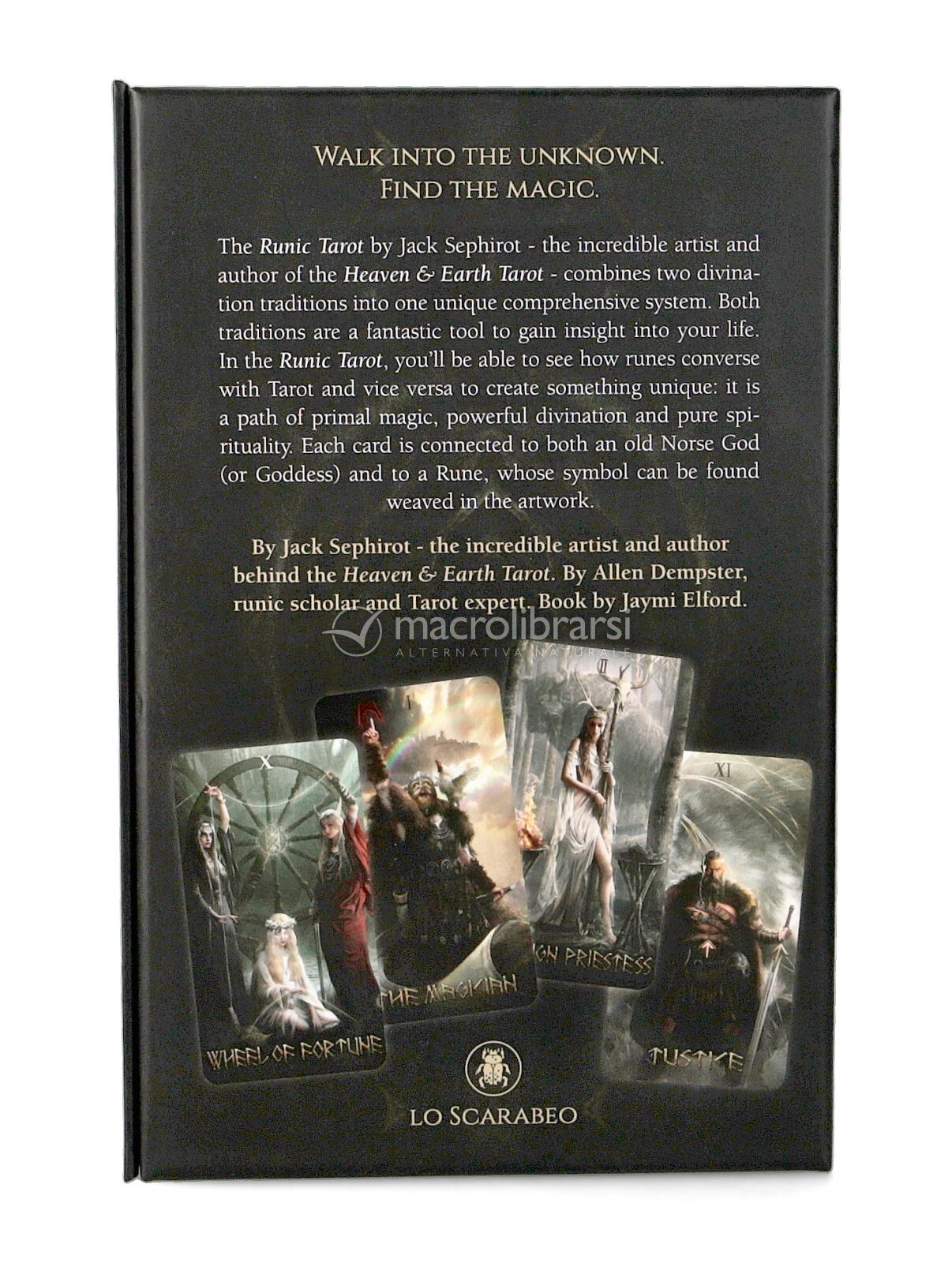
The Runic Tarot combines two divination traditions into one unique comprehensive system. Both traditions are fantastic tools to gain insight into your life.
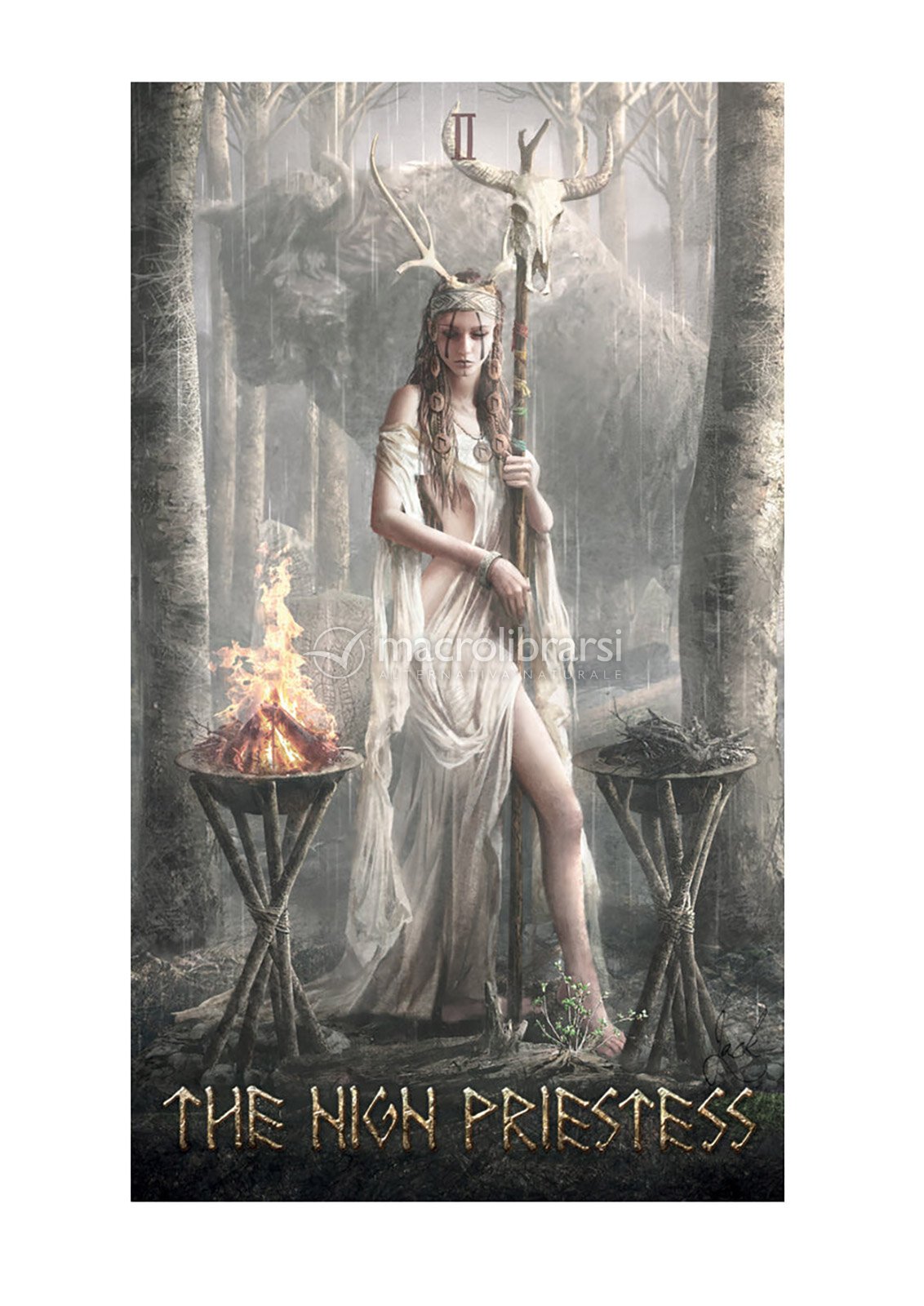
In the Runic Tarot, you'll be able to see how Runes converse with Tarot and vice versa. Each card in the Major Arcana is connected to both an old Norse God (or Goddess) and to a Rune, whose symbol can be found weaved in the artwork.
Tarot's original origins are rooted in myth. However, we can trace parts of the his-tory back through the years and several cultures. Playing cards were invented in China, before 1000AD. Traders distributed the cards through trade routes all over the continents.
The first appearance of Tarot as we know it dates back to 1400s Italy. This deck, known as the Visconti, was used to play a popular card game known as Tarocchi.
In 1781, Court de Gebelin, an occultist, was the first to associate the Tarot with occult and divination practices. In 1909, Arthur Edward Waite commissioned Pamela Coleman Smith to draw art-work for a new type of Tarot deck — known today as the Waite Smith deck. Smith added illustrations to all 78 cards.
There are now many versions of this deck in the market. For instance, the Original 1909 Tarot is the reproduction of the very first edition. In 1944 Aleister Crowley created his version, the Thoth Tarot, featuring the artwork of Lady Frieda Harris.
The rest of all modern decks can tie their roots back into either the Thoth or the Rider Waite Smith decks.
 Spedizione gratis acquistando 19€ di libri!